
At Plumber Man Utah in Spanish Fork, UT, that number covers labor, the seal, the bolts, the supply line and hauling the old unit away. Jobs fall into two groups. A swap-out replaces a toilet where the drain and water line already sit. A new rough-in puts a toilet where there was none, so there is drain work, venting and usually floor work. Most calls we take are swap-outs. The rest of the price comes from what sits under the old base. A solid flange and a healthy shutoff valve keep the job short. A cracked flange, a soft subfloor or a seized angle stop adds time and parts. This page walks through what the work includes, what moves the toilet install cost, and how to tell a worn-out toilet from one worth repairing.
What a Toilet Installation Job Actually Includes
We start by closing the shutoff valve and flushing the tank dry. A sponge pulls the last water out of the tank and bowl. Then we break the closet bolts loose, lift the old toilet free and carry it out. The old unit leaves with us.
A new wax ring or waxless seal goes down next. We replace the closet bolts and the supply line every time. Braided lines fail at the nut, often years before anyone thinks to look. Then we set the bowl, level it and tighten in stages.
Tile floors in older Spanish Fork homes are rarely flat. Shims and a bead of sealant stop the rock. We also check the flange height against the finished floor. A swap-out is one trip; a new rough-in needs drain and vent work first. We quote on site, never over the phone. Too much hides under that base.
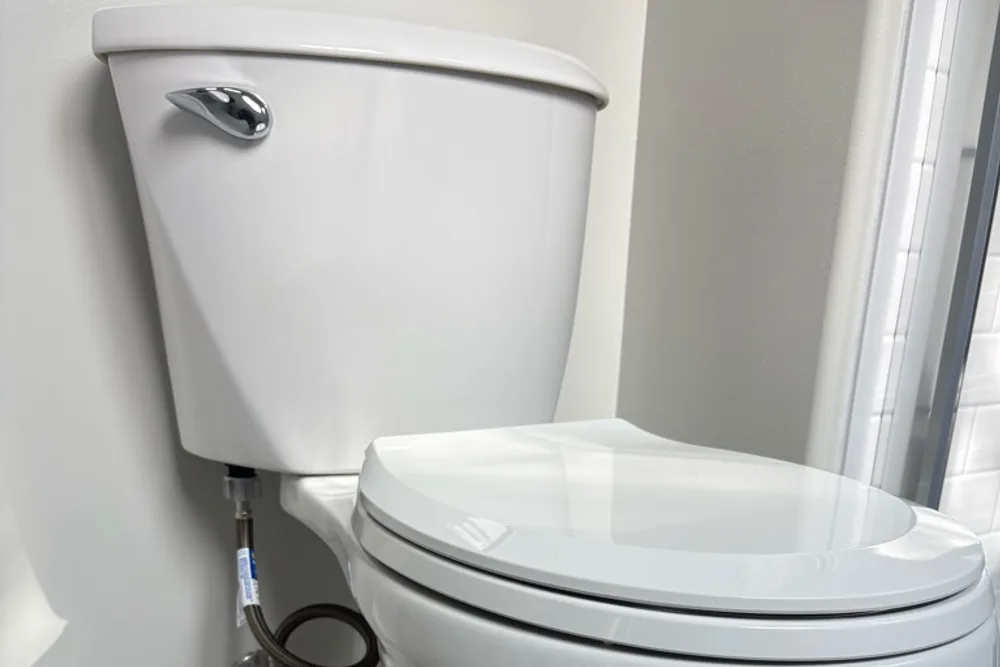
The Factors That Change a Toilet Installation Quote
Three things move a toilet install cost more than anything else. The fixture you pick, the rough-in measurement, and what we find once the old bowl is out.
Older homes in Spanish Fork and Payson often sit on cast iron drains with galvanized supply lines. Cutting into either adds work. Hard water across Utah County scales up fill valves and angle stops. So we swap the stop more often than not. Stairs matter too. A second-floor bath or a basement install means a longer haul out with the old unit.
- The fixture - a one-piece, wall-hung or comfort-height toilet costs more to buy and more to set than a basic two-piece.
- The rough-in - the wall-to-bolt distance is 10, 12 or 14 inches, and an odd size narrows what will fit.
- What is underneath - a broken flange, rotted subfloor or corroded shutoff valve adds parts and hours to the job.
Signs Your Toilet Needs Replacing Instead of Repair
Any crack means replace. Hairline cracks in a bowl or tank spread with every flush and every temperature swing. Once a tank is cracked, there is no patch worth trusting.
A rocking base is the next warning. It grinds the wax seal flat and water seeps out slowly underneath. Soft flooring or a dark stain at the base means it has been leaking a while. Homes here built before the 1960s often have wood subfloors over crawl spaces. That is where we find the worst of it.
Early low-flow models from the 1990s clog again and again, and no repair fixes a weak bowl design. A running toilet is a different story. The flapper, fill valve or flush valve is cheap to swap, and that is where we look first. A bubbling bowl points at a vent or main line problem, not the toilet.
How to Check a Bad Flapper or a Hidden Clog Yourself
Start with a dye test. Put a few drops of food coloring in the tank and wait fifteen minutes without flushing. Color in the bowl means the flapper is leaking by.
Then feel the flapper. Good rubber is springy, while a bad one is stiff, warped or slimy. Utah County's hard water leaves grit on the seat, and that grit cuts the seal. Listen at night, too. Refill cycles with nobody flushing mean water is escaping.
For clogs, watch the swirl. A slow swirl with a high water line points at a partial blockage. A plunger should move it in a few strokes. If a second fixture drains slowly at the same time, stop. That is a main line issue, and a store auger will scratch the porcelain. Britannica's write-up on how a toilet works shows why that flapper seat matters so much.
How to Prepare for Your Toilet Install Appointment
Measure the rough-in first. Run a tape from the finished wall to the center of the closet bolts. You will land on 10, 12 or 14 inches. Tell us that number and we load the right fixture and seal.
Measure the seat as well. Round bowls run about 16.5 inches front to back, and elongated bowls closer to 18.5. The bolt spread is usually 5.5 inches. Clear the bathroom and the path out to the door.
Pick your own toilet or ask us to supply one. Find your main shutoff before we arrive. In many Spanish Fork houses it sits in the basement near the front wall. Photos of the base and the shutoff let us stock the truck properly. Takes two minutes on a phone.
Keeping a New Toilet Leak-Free in Utah County Homes
Hard water is the main enemy here. Scale builds on the fill valve and the flapper seat until the toilet starts leaking on its own. Skip the in-tank cleaner tablets. They chew through flappers and tank gaskets faster than anything else we pull apart.
Flush waste and toilet paper only. Wipes sold as flushable do not break down, and they catch on old cast iron. Check the base and the supply line twice a year. Run a dry hand around the floor joint and the nut.
Ghost flushing is the early warning sign. If the tank refills by itself, the seal is on its way out. In winter, the risk is an unheated bathroom over a crawl space. The National Weather Service cold weather safety pages are worth reading before a hard freeze. Leave the door open on cold nights.
The Bottom Line
A toilet install cost comes down to the fixture, the rough-in and what sits under the old base. A clean swap on a sound flange is short work. A broken flange or a soft subfloor adds parts and hours, which is why we price on site. If you are weighing a new toilet in Spanish Fork, our toilet installation service covers the swap, the seal, the shutoff valve and the haul-away. Call Plumber Man Utah at (385) 230-3674.