
At Plumber Man Utah, we open faucets every week and find the same short list of culprits. A rubber washer has flattened. An O-ring has gone hard. A cartridge is scored. The hard, mineral-heavy water across Utah County speeds all of it up. That slow drip matters more than it looks. It wastes water around the clock, stains the sink, and keeps a seat eroding until a cheap fix turns into a full faucet swap. Faucets fall into four families: compression, cartridge, ball, and ceramic disc. Each one fails in its own way and takes its own parts. Once you know which one is on your sink, the repair is short and the parts are inexpensive. This guide walks through the causes, the shutoff steps, the repair itself, and how to make the next faucet last longer.
What Makes a Faucet Drip
In an older two-handle compression faucet, the rubber washer at the end of the stem takes all the wear. It squashes flat over the years and stops sealing. On single-handle faucets, the cartridge is the part that fails. A hairline crack or a scratch down the side lets water sneak past.
The valve seat matters too. Utah County water carries heavy calcium and magnesium. Those minerals pit the brass seat until it will not hold a fresh washer. Once the cover is off, we often find a seat that feels like fine sandpaper.
An O-ring at the base of the spout causes a different drip. That one shows up around the handle, not at the spout tip. High house pressure pushes water past any tired seal faster than normal. One more thing worth knowing: cloudy water at the spout is almost always trapped air, not a leak at all. It clears from the bottom up in a glass.
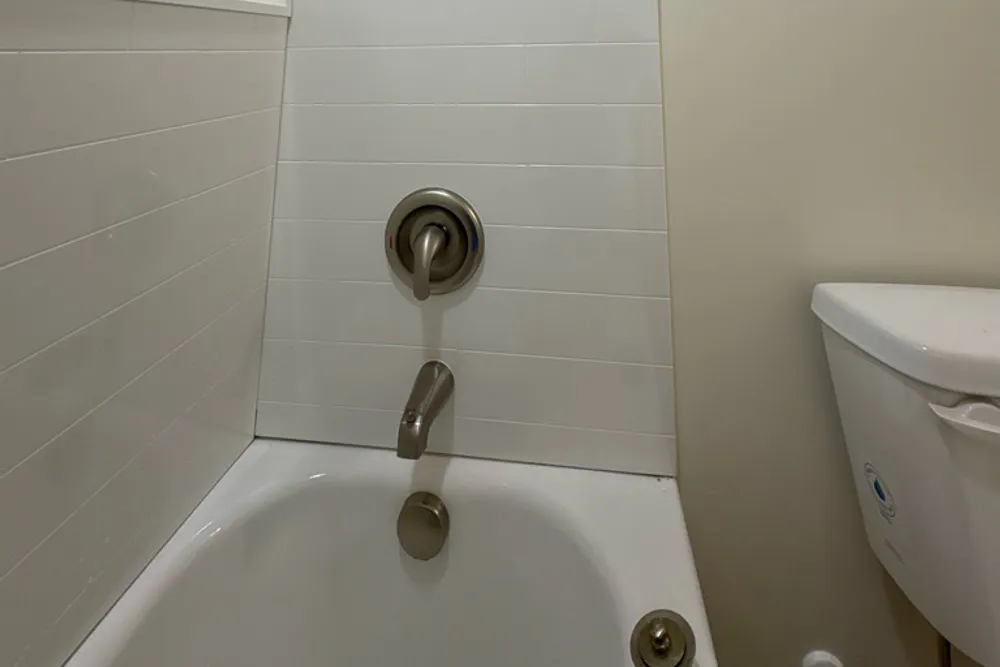
Identify Your Faucet Type Before You Buy Parts
Compression faucets have two handles and tighten down hard at the end of the turn. They use washers. Cartridge faucets can have one or two handles, but they turn smoothly and stop after about a quarter turn. No hard squeeze at the end.
Ball faucets use a single lever that swivels in a socket. You see them most at kitchen sinks in homes built through the 1980s and 1990s. That is a big share of the housing around Utah County. Ceramic disc faucets also use one lever, but the motion is short and up-and-down. They last the longest of the four.
Get under the sink with a flashlight and look for a brand name stamped on the valve body. That name decides which repair kit fits. Take two minutes to check. Best advice we give over the phone: pull the old part first. Then carry it to the counter and match it by eye. Guessing from a photo costs you a second trip.
Steps to Stop the Drip Yourself
Most drips are a 30-minute job with a screwdriver and an adjustable wrench. Work slowly and keep the parts in order on a towel.
That last step matters more than people expect. We have watched a repair look perfect, then weep at the base after sixty seconds of pressure. If the angle stops under the sink are stiff or weeping at the packing nut, stop there and call us. Old stops in homes built before the 1990s snap more often than they turn.
- 1. Close both angle stops under the sink, then open the tap to drain the line and release pressure.
- 2. Push a rag or stopper into the drain so small screws cannot disappear down it.
- 3. Pop off the handle cap, back out the handle screw, and lift the handle straight up.
- 4. Pull the cartridge or stem out, noting which way it faces before it leaves the body.
- 5. Wipe mineral scale off the valve seat with vinegar on a soft cloth until it feels smooth.
- 6. Fit the new washer, O-ring or cartridge, then reassemble in reverse order and open the stops slowly.
Signs the Cartridge Is Bad, Not the Washer
The clearest sign is simple. You put in a fresh washer and a new O-ring, and the drip keeps right on going. At that point the sealing surface inside the cartridge is worn, and no rubber part will save it.
Feel the handle. If it drags, feels gritty, or spins past where it should stop, the cartridge is chewed up inside. On single-handle faucets, hot and cold drifting together on their own is another giveaway. So is water seeping out from under the handle base while the tap runs.
Look at the part you pulled. Scoring lines down the side or a chalky white crust tell the story on sight. We replace the whole cartridge in that case rather than fight it. When you turn the water back on, open the stops slowly. Watch the faucet for a full minute before you put your tools away.
Faucet Sizing and When Replacement Beats Repair
Start by counting the holes in the sink deck. You will have one hole, three holes at a 4-inch spread, or three holes at an 8-inch spread. Bathroom sinks most often take a 4-inch centerset or a single-hole unit. Bar sinks usually need a smaller single-hole faucet with a tighter deck footprint.
Measure two more things before you buy. Deck thickness decides whether the mounting hardware reaches, and clearance to the backsplash decides whether the handle will actually lift. Tight rear clearance catches people out constantly.
Replace the faucet when the body itself is corroded green at the base. Replace it too when the manufacturer no longer makes the internal parts. That happens with older builder-grade units pulled out of homes across the county. Repair is the better call when the body is sound and the kit is still on the shelf. The U.S. Environmental Protection Agency notes that household leaks waste trillions of gallons a year. A dripping faucet is one of the easiest to shut off for good.
Keep Utah County Hard Water From Killing the Next Faucet
Mineral scale is the main reason seals fail here. The water that comes off the Wasatch aquifers is hard. That hardness deposits on every valve seat and aerator screen in the house. Unscrew the aerator a few times a year and soak it in plain vinegar. It takes about five minutes.
Check your static water pressure with a gauge on a hose bib. Anything running high will cut the life of every washer and O-ring in the home. A pressure reducing valve on the main line protects the whole house at once. It is the upgrade we recommend most often. Softening or conditioning the water cuts scale buildup right at the valve seats. That is where it does the real damage.
Winter advice is narrower than people think. Let a faucet trickle only where the supply line runs through an exposed wall, crawl space or unheated garage. Interior fixtures on warm walls do not need it. Ready.gov offers guidance on protecting pipes during hard freezes, and the overnight lows across Utah County make that worth reading. With clean water and steady pressure, most faucets give many good years. For a drip that keeps coming back after a cartridge swap, reach Plumber Man Utah through our Google Business Profile. You can also call (385) 230-3674.
The Bottom Line
A dripping faucet in Utah County almost always comes down to a worn washer, a tired O-ring, or a scored cartridge working against hard water. Shut the angle stops, pull the part, match it exactly, and clean the scale off the seat before you reassemble. Check your house pressure while you are at it. If the drip returns after a proper repair, the valve body is likely done. Our faucet repair page covers the full range of work we handle on sinks and tubs.