At Plumber Man Utah, most calls we take in Spanish Fork, UT start with a stain, a sound, or a water bill that jumped. Leaks fall into a few groups. Supply leaks sit under pressure and drip or spray around the clock. Drain leaks only show when something upstairs runs. Slab leaks hide under concrete and often surface as a warm patch of floor. Fixture leaks at toilets, faucets and water heater fittings are the easiest to reach and the easiest to ignore. The method changes with the group. You repair a leak in copper differently than one in old galvanized steel or buried PEX. Below are the signs, the causes we see here, the repair steps, and when a spot fix stops making sense.
Signs of a Hidden Plumbing Leak in a Spanish Fork Home
A hidden leak rarely announces itself. The fastest check is your water meter. Shut off every faucet, toilet and appliance, then watch the dial for ten minutes. If it creeps, water is going somewhere.
Plenty of homes here sit on slab-on-grade concrete. A hot line leaking under that slab leaves a warm spot you can feel barefoot. On basement walls, look for damp shadows along the bottom few inches.
Your nose helps too. A musty smell, peeling paint, or a stained drywall seam means water has been moving for weeks. A bill climbing with no change in how you use water says the same thing.
Nine times in ten, the silent waster we find is a toilet. You hear it trickle between flushes. That flapper can pass hundreds of gallons a week. Easy to miss, easy to fix.
What Causes Pipe Leaks in Utah County Houses
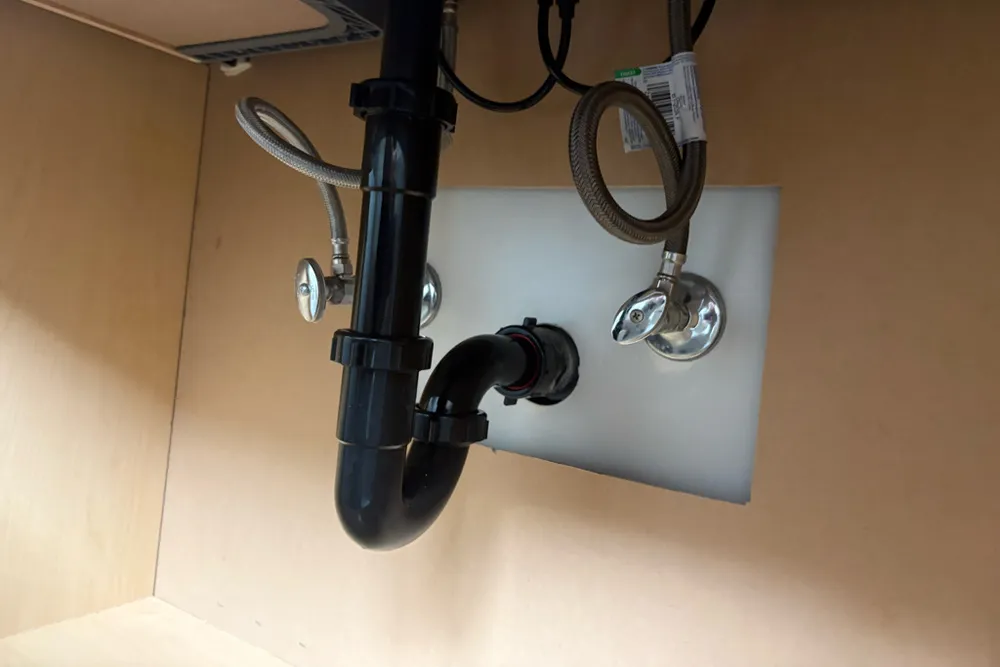
Hard mineral water is the background cause here. Utah County water carries heavy calcium and magnesium. Scale builds inside valves, aerators and water heater fittings, holding moisture against the metal until the joint gives up. Water this high in dissolved minerals is what scientists call hard water, and it shortens the life of every fitting it touches.
Many mid-century Spanish Fork builds were plumbed in galvanized steel. Cut a section out and the inside looks like a rusty straw. Pressure is the other quiet troublemaker. Anything much over 80 psi pounds supply lines and toilet fill valves.
Freezing finishes the job. Hose bibs and crawlspace runs split when a hard cold snap settles into the valley. Shifting clay soil adds its own pull on buried service lines. We see that one every spring thaw.
How a Plumber Repairs a Leaking Pipe, Step by Step
The order matters more than the tools. Skip the pressure test and you close a wall over a weeping joint. That one always comes back.
- 1. Shut the main water valve and drain the affected line at the lowest faucet.
- 2. Locate the leak with a moisture meter, a pipe camera, or acoustic listening gear.
- 3. Open only the drywall or slab needed to reach the pipe.
- 4. Cut out the damaged section with a tubing cutter.
- 5. Join fresh pipe with a press fitting, solder, or a PEX crimp.
- 6. Pressure test the line, then turn the water back on.
- 7. Watch the repaired joint stay dry before closing the wall.
Choosing Between a Spot Repair and a Repipe
One pinhole in otherwise sound copper is a spot repair. Cut it out, put in a new coupling, move on. That holds for years.
Repeat leaks on the same run tell a different story. When a line fails twice in a season, the whole pipe is tired. Patching it again just buys a few months.
Galvanized steel is usually a repipe call. If you see rust flakes in the tub when the water first runs, the inside wall is already eaten thin. Slab leaks are often rerouted overhead through the attic instead of jackhammering the floor. Cheaper, cleaner, and no concrete dust through a finished basement.
Pipe age, how easy the run is to reach, and any remodel you have planned all steer the decision. If a wall is coming down next year anyway, we plan around it.
What to Do Before the Plumber Arrives
Find the main shutoff and close it. In older homes around here it is usually in the basement near the front wall, or in a crawlspace. Tag it with a marker now. You will not want to hunt for it at midnight.
Kill power to any outlet or panel near standing water. Then move furniture and lift rugs off wet flooring. Wet carpet pad holds water for days and starts to smell fast.
Take photos before you clean anything up, and keep simple notes on when it started. Coverage usually applies to sudden leaks, not slow seepage, so check with your insurer. FEMA's flood insurance information also explains why groundwater flooding sits outside a standard homeowners policy.
Preventing the Next Leak Through a Spanish Fork Winter
Disconnect garden hoses and drain outdoor spigots before the first hard freeze. A hose left on traps water in the bib, and that frozen plug splits the pipe behind the siding. You often do not find it until spring.
Insulate pipe runs in crawlspaces, garages and exterior walls. Foam sleeves cost little and take an afternoon. Check pressure at a hose bib with a gauge, and add a regulator if it reads high.
Swap rubber washing machine hoses for braided steel. Rubber ones bulge at the ends before they burst, and that is the single worst flood we get called to. Twice a year, look under every sink and around the base of the water heater. Five minutes, no tools.
The Bottom Line
Shut the water off, find the exact source, replace the failed section, then test before anything gets closed up. That order is what makes a repair last. Hard water, high pressure and valley cold snaps are what put most Spanish Fork pipes on the table in the first place. If you need help to repair a leak, our plumbing leak repair service covers the whole job, from locating it to proving the joint holds. Call (385) 230-3674.