
For most kitchens in Utah County, about an hour, start to finish. That is the answer for a like-for-like swap, where the sink already has power and a switch under the counter. A first-time install takes longer, because wiring and a new drain arm have to be built from scratch. At Plumber Man Utah, we work on both kinds every week, from Lehi down to Payson. This page walks you through the install time, how to pick the right size unit, what to clear out before we show up, and how to tell a dying disposal from one that just needs a reset. We also cover how to test the new unit and the small habits that keep it grinding for years. Hard water and older cabinets change the job here, so we explain how.
Garbage Disposal Install Time, Start to Finish
A like-for-like swap is the short job. If the new unit fits the old mount ring, we are usually done in about an hour. A first-time install runs longer, since there is no outlet or switch yet.
Time goes once the old unit drops. Corroded drain lines crumble at the slip nut. A sink flange fused with hardened putty takes real scraping, which is common in Utah County homes built before the 1980s. A dishwasher hookup and a fresh trap arm add minutes. Deep cabinets slow every step.
- Step 1 - Cut power at the breaker and shut the sink stop valves.
- Step 2 - Disconnect the drain and dishwasher hose, then drop the old unit.
- Step 3 - Pull the old sink flange and scrape the putty ring clean.
- Step 4 - Bed the new flange and tighten the mount ring.
- Step 5 - Wire the unit, or plug in the cord.
- Step 6 - Hang it, fit the trap arm, and seal the joints.
- Step 7 - Run cold water and check every joint for drips.
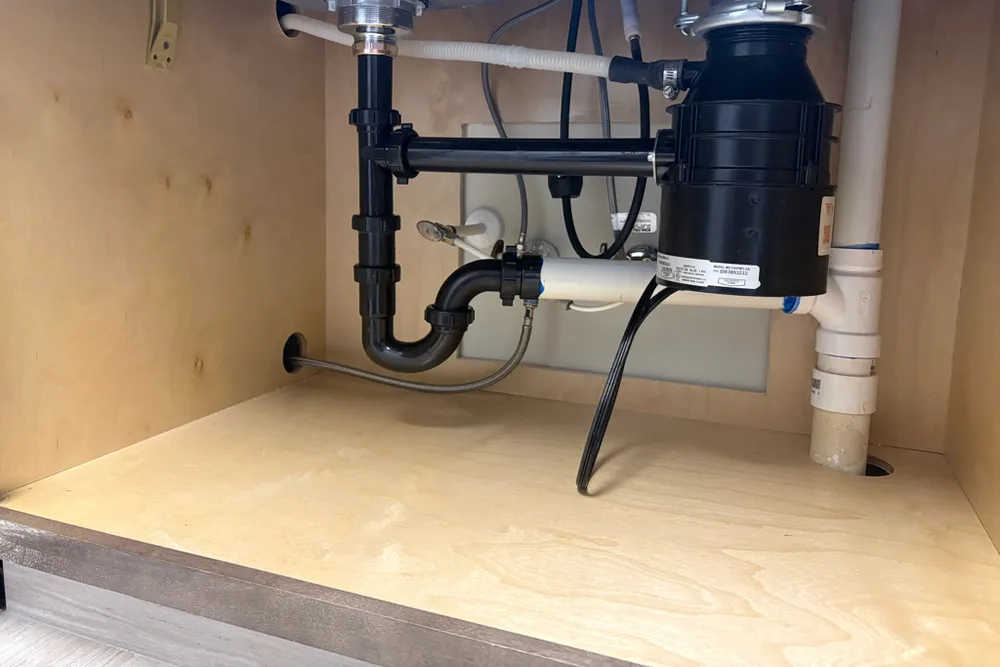
Picking the Right Disposal Size for Your Kitchen
Horsepower decides what the chamber can chew. A one-third horsepower unit suits light use and soft scraps. A half handles a normal family load. Three-quarters and one horsepower models grind faster and jam far less, which matters in a big household.
Small households do fine on the lower end. Larger families in Utah County, with four or five people through the kitchen each night, should go bigger. A bigger grind chamber also needs more clearance under the sink, so we measure before ordering. Models with sound insulation and stainless grind parts cost more and last longer, and the basic design is well described in the garbage disposal unit overview. Homes on septic outside city sewer, like parts of Goshen or Cedar Fort, should use a septic-safe model. That is the one we would pick there.
What to Clear Out Before the Plumber Arrives
Empty the cabinet under the sink and wipe the base dry. Cleaners, buckets and the trash pull-out all have to come out anyway. A clear floor saves us ten minutes of shuffling.
Point out where the wall switch and the outlet sit, since some kitchens switch the outlet and some do not. Tell us if the dishwasher drains into the disposal, because that changes the hose and the knockout. Keep pets and kids out while wiring is open. Find the breaker panel too, often in the garage or an unfinished basement in Utah County houses. Quick power shutoff keeps the job safe and moving.
Signs Your Disposal Needs Replacing, Not Repairing
Water pooling under the unit is the clearest sign. When it drips from the bottom seam, the shell has cracked and no sealant holds that. A hum with no spin means the flywheel is jammed or the motor is finished.
Repeat resets and a breaker that trips point the same direction. Rust flakes in the strainer or a metallic smell from the drain mean the chamber is eating itself. Most units give several years of normal use before that starts. Sometimes a reset button and a hex wrench in the bottom socket still free a jam, and we always try that first. On a unit with a cracked shell, nothing on the shelf fixes it.
How to Check the New Disposal Works Right
Run cold water and flip the switch. You want a steady, even grind, not a rattle or a wobble. A rattle usually means a spoon or a bottle cap is still in there.
Let it run, then look at every joint after about five minutes. Slip nuts, the flange and the discharge elbow all get checked dry with a paper towel. If the dishwasher drains through the unit, run a full cycle and watch the hose connection. Confirm the knockout plug came out, or that dishwasher water backs up fast. Press the reset button once so you know it seats. Takes about two minutes.
Habits That Keep a Utah County Disposal Running
Cold water during the grind and for a few seconds after is the whole trick. Cold keeps fats firm so they wash out instead of coating the pipe. Grease, celery strings, potato peels, bones and coffee grounds all belong in the bin.
Water across Utah County runs hard, and the mineral content in hard water leaves scale inside the chamber. A tray of ice with cold water running knocks that loose. Run the unit often so the parts do not seize. Never put a hand inside; cut power first and use tongs. If clogs keep coming back past the trap, the line itself needs attention. That is a call, not a plunger.
The Bottom Line
A like-for-like garbage disposal swap takes roughly an hour in most Utah County kitchens. First-time installs run longer because power, a switch and new drain work come first. Size the unit to your household, clear the cabinet before we arrive, and test every joint once it is in. If your old unit pools water underneath, it is past repair. Our garbage disposal installation page covers the full service, pricing factors and scheduling. Call (385) 230-3674 and we will take a look.